
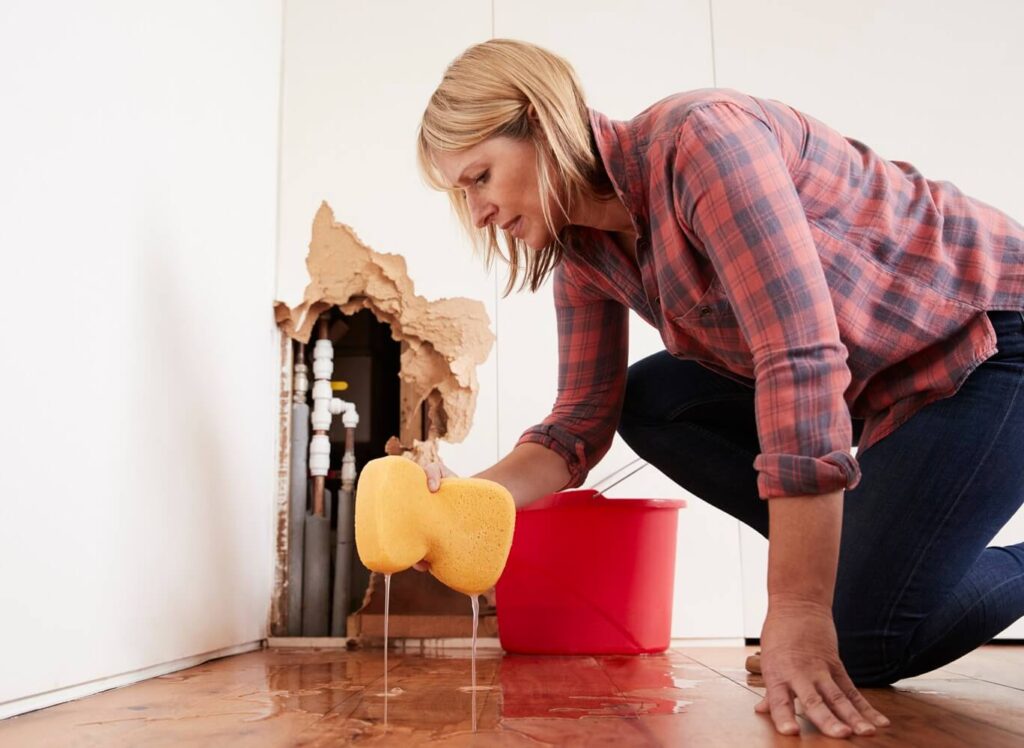
A plumbing emergency gets stressful fast. Water is spreading across the floor, a toilet is overflowing, sewage is coming up in the tub, or a water heater is leaking.
Your first job is not to diagnose the whole problem. Stop more water from entering the home, keep everyone away from electrical and sewage hazards, protect what you safely can, and call for professional help.
1. How do you stop the water during a plumbing emergency?
Start as close to the problem as you safely can.
For a toilet, look for the small shutoff valve on the wall or floor behind it. Turn it clockwise until it stops. If the toilet is overflowing from the bowl, do not keep flushing.
For a sink, the hot and cold shutoff valves are usually inside the cabinet below the sink. A failed faucet supply line or connection can often be isolated there.
If the fixture shutoff will not turn, is missing, breaks, or does not stop the water, go to the home’s main water shutoff.
Where is the main water shutoff usually located?
In Mobile-area homes, the main shutoff may be near the water meter, where the water line enters the house, or in a utility area, garage or crawlspace. Homes vary, especially in older neighborhoods such as Midtown, downtown Mobile and Spring Hill.
If you know where the main shutoff is and can reach it safely, close it. If not, do not dismantle things or enter an unsafe area to find it. Call for help.
A burst or leaking supply line keeps feeding water until the source is shut down. Stopping the flow comes before cleanup.
2. When should you turn off electricity?
If water is spreading toward outlets, power strips, appliances or electrical equipment, electricity becomes part of the emergency.
If the breaker panel is dry, the path to it is completely dry, and you can safely reach the correct breaker, turn off power to the affected area.
Do not touch the panel with wet hands or stand in water while operating breakers.
If the panel is wet, water is between you and it, you see sparks, or you are unsure whether standing water could be energized, stay away. Keep people and pets out and contact an electrical professional or utility.
Standing water near live electrical is a safety problem, not a cleanup job.
3. What should you never touch?
Do not handle sewage with bare hands or treat a sewer backup like an ordinary spill.
If wastewater is backing up into a tub, shower, floor drain or toilet, keep people and pets away. Stop using plumbing fixtures in the home until the cause is addressed. Running more water can add more wastewater to the system.
A sewer backup contains contaminants and needs proper removal, cleaning and drying.
Also stay away from submerged electrical cords, outlets, appliances and equipment. If there is any question about electrical safety, do not enter the water.
If an overflowing toilet appears to be caused by the toilet tank or supply connection, shut off the fixture valve if it is safe. If the bowl is filling because drains are backing up elsewhere, stop using water and call for emergency plumbing repair.
Stopped the water and everyone is safe?
Call an emergency plumber at 251-239-9163. Roto-Rooter Plumbing & Water Cleanup answers the phone 24 hours a day and dispatches from Mobile.
4. What should you move, and what should you photograph?
Once the water source is off and the area is safe to enter, move belongings off the floor. Start with items you can lift quickly without walking through contaminated water.
Move rugs, small furniture, boxes and other belongings away from spreading clean water when it is safe. Do not drag electrical equipment through wet areas.
Before cleanup changes the scene, take photos and video. Capture the source if safe, the rooms affected, visible water lines, damaged flooring, walls, cabinets and belongings. That documentation can matter later.
5. What should you do if the water heater is leaking?
If the emergency involves a water heater, shut off the water supply to the heater if you can safely identify and reach the valve.
Then shut off the energy source safely. For an electric water heater, use the breaker only if the panel and the path to it are completely dry. If water is near the panel or you cannot reach it safely, stay clear.
For a gas water heater, do not experiment with gas controls if you are unsure what you are doing. If you smell gas, leave the area and contact the gas utility or emergency services from a safe location.
Once the immediate flow is controlled, the water heater needs to be inspected to determine whether repair or replacement is appropriate.
6. What should you tell us when you call?
When you call an emergency plumber, these details help us understand the plumbing emergency before dispatch:
- What is happening: active leak, burst pipe, overflowing toilet, sewer backup, water heater leaking or another problem
- Where the water is coming from
- Whether you shut off the fixture or main water supply
- Whether water is near outlets, appliances or a breaker panel
- Whether the water appears clean or contains sewage
- Which room or level of the home is affected
- Whether water has spread into drywall, cabinets, flooring or nearby rooms
- Your address and the best phone number to reach you
If you need an after hours plumber, give us the same information. We answer the phone 24 hours a day and dispatch from Mobile. You do not need to diagnose the problem before you call.
For a burst pipe in Mobile, Alabama, a failed sink line in Semmes, a sewer backup in Saraland, or a water heater problem on the Eastern Shore, the goal is the same: make the area safe and stop additional water when you safely can.
What happens after the water stops?
Stopping the leak is only the first half of the job.
Water soaked into drywall, carpet pad, insulation, baseboards or cabinetry does not disappear because the visible puddle is gone. Moisture can remain inside materials after the floor looks dry.
Wet materials need to be evaluated, water removed and affected areas dried properly. The clock on mold starts as soon as materials become wet, so hidden moisture should not be left in place.
That is why a plumbing emergency can require two kinds of work: fixing the source and drying the damage it left behind.
Roto-Rooter Plumbing & Water Cleanup handles both sides with our own crews: the plumbing repair and the water damage restoration afterward. One company, one call. If mold remediation becomes necessary, that is also a service we provide.
We serve Mobile, Baldwin and Washington Counties, including Midtown and downtown Mobile, Spring Hill, west Mobile, Chickasaw, Saraland, Semmes, Daphne, Fairhope and Spanish Fort. We are a third-generation family business, locally owned and operated since 1962, with about 48 employees and about 31 licensed plumbers. Our work is under warranty.
If you need an emergency plumber in Mobile, AL, call Roto-Rooter Plumbing & Water Cleanup at 251-239-9163. We answer 24 hours a day and dispatch from Mobile.
Frequently Asked Questions
When should I call an emergency plumber for an overflowing toilet?
Start with the toilet’s shutoff valve. If it does not work, is missing, or the overflow is part of a larger sewer backup, stop using water and shut off the main supply if it is safe to do so. Call an emergency plumber if you cannot stop the water, the overflow keeps returning, or wastewater is backing up in other fixtures.
Can I clean up a sewer backup myself?
Avoid direct contact with sewage. A sewer backup is a health hazard, not ordinary household water. Keep people and pets away and call for professional drain, sewer and cleanup service.
What should I do if water is near an electrical outlet?
Do not step into standing water or touch wet electrical equipment. If you can safely shut off the affected circuit from a completely dry location, do so. If the panel is wet or you would have to cross water to reach it, stay away and contact an electrical professional or utility.
Do I need water damage restoration after a plumbing leak?
If water has reached drywall, carpet pad, insulation, cabinetry or other absorbent materials, professional drying may be needed. A dry surface does not mean hidden materials are dry.
Can one company handle a plumbing emergency and the water cleanup afterward?
Yes. Roto-Rooter Plumbing & Water Cleanup handles emergency plumbing repair and water cleanup and restoration with our own crews. We serve Mobile, Baldwin and Washington Counties and answer the phone 24 hours a day at 251-239-9163.