
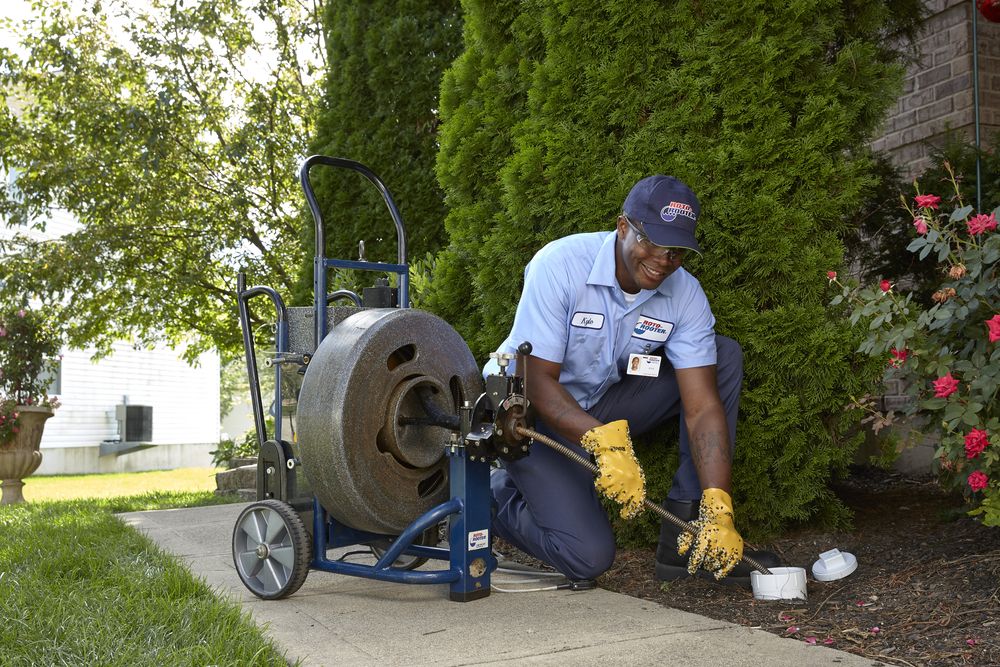
A drain that keeps clogging over and over is trying to tell you something.
Sometimes the answer is simple: grease, soap, hair or another blockage needs to be cleared. But when the same drain backs up again and again, especially in an older home, the clog may only be the symptom.
Across Mobile, Baldwin and Washington Counties, we work in older neighborhoods in Midtown and downtown Mobile, tree-filled Spring Hill, Chickasaw, Saraland and Semmes, west Mobile, and Eastern Shore communities such as Daphne, Fairhope and Spanish Fort. The plumbing systems vary, but recurring drain backups tend to come back to a familiar group of causes.
Here is what is usually happening underground and what actually fixes it.
Why Do Older Drain Lines Keep Clogging?
Older drain systems have had years of use, soil movement, root growth and exposure to moisture. Pipes that once had a smooth, open interior can become rough, narrowed, shifted or damaged.
Drain cleaning and drain repair solve two different problems. Drain cleaning removes an obstruction. Repair corrects a problem with the pipe itself.
If a line keeps backing up after it has been cleared, a video pipe inspection can show whether the cause is buildup, roots, a separated joint, a belly or damaged pipe. Then the repair can match the cause.
Aging Cast Iron Drain Lines Scale and Narrow From the Inside
Cast iron is durable, but the inside changes as it ages. Corrosion creates rough scaling and flaking that narrows the pipe and gives grease, soap and debris more places to catch.
Cabling can open a blockage. Hydro jetting can remove heavier buildup from the pipe walls when the line is in suitable condition. But cleaning cannot rebuild deteriorated or damaged cast iron. If the pipe itself is failing, the damaged section needs repair or replacement.
Clay Sewer Laterals Can Shift at the Joints
Clay sewer pipe is made in sections, and ground movement can shift or separate those joints. Waste and paper catch at the uneven spot. Soil can get in. So can roots.
A cable can clear the blockage, but it cannot put the joint back together. If the separation keeps causing backups, the pipe needs repair. Options include trenchless methods such as pipe lining or pipe bursting, or traditional excavation and replacement.
Live Oak and Water Oak Roots Find Cracks and Open Joints
The beautiful oaks found throughout the Gulf Coast can also create headaches underground.
Roots seek moisture. Give them a crack, failed joint or small opening in a sewer line, and they have a path inside. Once there, they catch toilet paper and waste until the line slows down or stops.
This is familiar in established, tree-covered areas around Mobile and the Eastern Shore. Cutting roots out restores flow, but recurring sewer line root intrusion means the entry point still exists. If roots keep returning, the damaged section needs attention.
Need Help With a Drain That Will Not Stay Clear?
If the same line has backed up more than once, call Roto-Rooter Plumbing & Water Cleanup at 251-239-9163. We can clear the blockage and determine whether something deeper is causing it to return.
Grease, Soap and Hair Turn Slow Drains Into Full Stops
Not every repeat clog means the sewer line is broken.
Kitchen grease sticks to pipe walls and traps food particles. Soap residue and hair build up in bathroom drains. The opening gets smaller until a slow drain becomes completely blocked.
These are often straightforward drain-cleaning problems. Cabling removes many common clogs, while hydro jetting tackles heavier buildup when appropriate. If the drain stays clear afterward, buildup was likely the problem. If it slows again quickly, there is probably more going on.
Bellied or Sagging Lines Hold Water and Waste
Drain lines rely on gravity and need consistent fall so wastewater keeps moving. When soil shifts beneath a section of pipe, the line can sag and create a low spot, often called a belly.
Water and waste settle there instead of flowing through. Drain cleaning can remove the material sitting in the belly, but it cannot change the slope of the pipe. A significant belly requires repair or replacement of the affected section so the line can drain correctly again.
Heavy Gulf Coast Rain Can Expose Cracks and Failed Joints
Heavy rainfall does not create a crack in a sewer line, but it can make an existing problem much more obvious.
When the ground is saturated and the water table is high, groundwater and silt can enter a cracked pipe or separated joint. That extra material restricts flow and contributes to recurring drain backups.
If problems show up after heavy rain, tell the plumber. The goal is to find the opening letting water or silt into the line and repair it, not simply clear the line again.
For homes on septic systems, drainage trouble can also involve the septic system itself. That needs to be ruled in or out before deciding on a repair.
How Can You Tell a One-Time Clog From a Structural Drain Problem?
One isolated clog does not automatically mean you have a damaged sewer line. The pattern is what matters.
Signs It May Be a One-Time Clog
- Only one fixture is affected.
- The cause is fairly obvious, such as hair, grease or buildup.
- The drain works normally after professional cleaning.
- Other fixtures continue draining normally.
- The problem does not return soon after cleaning.
Signs There May Be a Larger Drain or Sewer Problem
- The same drain repeatedly backs up after being cleared.
- Multiple fixtures are slow or backing up at the same time.
- Flushing a toilet causes another fixture to gurgle or rise.
- The main sewer line has needed repeated cleaning.
- Problems become more noticeable after heavy rain.
- Roots, soil, silt or damaged pipe are found during cleaning.
- The line opens temporarily but begins slowing again soon afterward.
Those signs do not automatically mean the entire sewer line needs replacement. The issue could be heavy buildup or one damaged section. Identify the cause first, then decide between drain cleaning, hydro jetting, broken drain repair, trenchless repair or traditional replacement.
Emergency drain cleaning can get a blocked line open, but if a structural problem caused the blockage, clearing it is only the first step.
What Should You Do If Your Drain Backs Up Again?
Give the plumber the history: which fixtures are affected, how often it happens, what was done previously, how long it stayed clear and whether rain changes the pattern.
If the line is completely stopped, you may be calling to ask about emergency drain cleaning or same-day drain repair. Be sure to mention if this has happened before. A repeat backup gives the plumber important information that a first-time clog does not.
That information helps separate a routine clog from a recurring structural problem.
Roto-Rooter Plumbing & Water Cleanup has served Mobile, Baldwin and Washington Counties since 1962. We are a third-generation, locally owned and operated family business with about 48 employees and about 31 licensed plumbers. Our services include drain cleaning and cabling, hydro jetting, video pipe inspection, trenchless sewer repair, traditional sewer line excavation and replacement, and septic tank services.
We answer the phone 24 hours a day and dispatch from Mobile. Our work is under warranty.
If your drain keeps backing up, call Roto-Rooter Plumbing & Water Cleanup at 251-239-9163. We will help identify what is causing the problem and what type of service or repair makes sense for the line.
Frequently Asked Questions
Why Does My Drain Keep Backing Up After It Has Been Cleaned?
If a drain repeatedly backs up after cleaning, the underlying cause may be heavy buildup, root intrusion, a separated pipe joint, a sagging line or damaged pipe. A video pipe inspection can show what is causing the blockage to return.
Can Tree Roots Grow Into a Sewer Line?
Yes. Roots enter sewer lines through cracks, separated joints and other openings. Cutting the roots can reopen the line, but recurring root intrusion usually means the opening in the pipe still needs to be addressed.
How Do I Know if I Need Drain Cleaning or Sewer Line Repair?
A one-time blockage often needs drain cleaning. Repeated backups, several affected fixtures, recurring roots, soil or silt inside the line, or visible pipe damage point to a larger problem that needs further diagnosis.
Can Heavy Rain Cause My Drains to Back Up?
Heavy rain can make an existing underground pipe problem more noticeable. Groundwater and silt can enter through cracks or separated joints when the surrounding soil is saturated, restricting flow inside the line.
What Is the Difference Between Cabling and Hydro Jetting?
Cabling uses a mechanical cable to break through or remove an obstruction. Hydro jetting uses high-pressure water to remove heavier buildup from inside the pipe. The right method depends on the blockage and the condition of the line.