
When an insured calls with water running through a ceiling, standing in a hallway or soaking into flooring, the first concern is stopping the source and making sure everyone is safe. But once the immediate emergency is under control, the next 24 to 48 hours can have a major impact on how much of the property is affected and how clearly the loss can be documented.
For insurance agents, brokers and adjusters, that makes the mitigation contractor an important part of the early response. You are not determining the restoration scope yourself, but the company you hand your insured to can make the next several days much easier — or much more complicated.
At Roto-Rooter Plumbing & Water Cleanup, we work with property owners and insurance professionals throughout Mobile, Baldwin and Washington Counties. As a third-generation family business serving the Gulf Coast since 1962, we understand that when an agent gives an insured our number, that referral reflects on the agent, too.
Why are the first 24 to 48 hours after a water loss so important?
Water damage does not necessarily stop when the leak stops.
Moisture can migrate into drywall, flooring, subflooring, cabinetry, insulation and other materials beyond the area where water is immediately visible. Some building materials absorb and retain moisture, meaning the true extent of a loss may not be obvious without professional moisture detection.
There is also a limited window to begin effective drying. The U.S. Environmental Protection Agency advises that it is important to dry water-damaged areas and items within 24 to 48 hours to prevent mold growth. The EPA explains that mold may begin growing indoors when mold spores land on surfaces that are wet, and that the key to mold control is moisture control.
That does not mean every property develops mold at exactly the 48-hour mark. Conditions vary from one loss to another. It does mean that waiting several days before addressing wet building materials can create a much more difficult restoration situation.
Can the water category change if mitigation is delayed?
Yes. One reason a fast professional assessment matters is that the condition of the water loss can change.
The ANSI/IICRC S500 Standard for Professional Water Damage Restoration is the restoration industry’s consensus-based procedural standard. The current published standard is the Fifth Edition, issued in 2021, and it addresses inspections and pre-restoration evaluations, psychrometry and drying technology, equipment and instruments, administrative procedures and project documentation, and structural restoration.
The S500 uses three water categories based on contamination conditions: Category 1 water originates from a sanitary source; Category 2 contains significant contamination and has the potential to cause discomfort or sickness; and Category 3 is grossly contaminated and can contain pathogenic, toxigenic or other harmful agents.
Importantly, the category is not determined by the original source alone. The cleanliness of Category 1 water can deteriorate to Category 2 or Category 3 through contact with building materials and soil, and time and temperature can also affect the quality of the water and change its category.
The IICRC also emphasized in a March 2026 position statement that water categorization must be based on the actual conditions observed at the loss site rather than automatic assumptions about the source of the water. That statement notes that weather events in and of themselves do not immediately imply contamination, and that top-down water ingress and wind-driven rain are not automatically considered Category 3.
For the claim professional, the important takeaway is simple: getting a qualified mitigation contractor on-site early allows conditions to be evaluated and documented as they actually exist.
What does secondary water damage look like?
When drying is delayed, the affected area can become more complicated than the original visible water loss.
Water can wick upward through gypsum wallboard, soak into insulation, migrate underneath flooring or cabinets and affect layers of material that may look dry from the surface. Wood products can swell or distort when wet, plywood can delaminate, and some gypsum and wood-composite materials can deteriorate after prolonged saturation.
Microbial growth becomes another concern. The EPA advises acting quickly when water leaks or spills occur indoors, noting that if wet or damp materials or areas are dried within 24 to 48 hours, in most cases mold will not grow. It also notes that absorbent or porous materials such as ceiling tiles and carpet may have to be discarded if they become moldy.
The goal of prompt mitigation is not to remove more material than necessary. It is to identify what is wet, determine what can reasonably be dried and restored, address materials that cannot be appropriately restored, and prevent the original water event from creating additional damage.
Does an insured have a responsibility to prevent additional damage?
Generally, yes — but the exact duties are governed by the individual policy and should always be addressed by the carrier or adjuster.
The Alabama Department of Insurance tells consumers to mitigate their damages, which it explains means taking whatever steps are necessary to prevent further damage and loss to the property until the insurance company has a chance to inspect and assess the damages. The department also advises consumers to take photographs and video of damaged areas to help with the claim and assist the insurance company in its investigation.
For a water loss, bringing in a mitigation professional promptly is one way an insured can begin addressing active moisture while preserving documentation of the conditions that were found.
This is not a statement about whether a particular loss, mitigation service or repair is covered under a policy. Coverage decisions belong to the insurance carrier and adjuster.
What documentation should a professional mitigation contractor provide?
A good mitigation file should help tell the story of the loss from arrival through completion.
That can include photographs of affected areas, initial and ongoing moisture readings, moisture mapping, drying goals, daily drying logs, temperature and relative-humidity readings, psychrometric data, equipment records and documentation showing how conditions changed throughout the drying process.
The IICRC S500 specifically includes administrative procedures, project documentation, inspections, psychrometry and drying technology within the professional water-restoration process.
FEMA’s National Flood Insurance Program Claims Manual — while specific to NFIP flood claims — offers a useful example of the level of documentation that can support professional structural drying, including its required elements for drying logs.
For an agent or adjuster, strong field documentation means there is something concrete behind the scope of work. Instead of trying to reconstruct what happened days later, the file shows what was found, what was done and how the structure responded.
What should a professional water mitigation response actually involve?
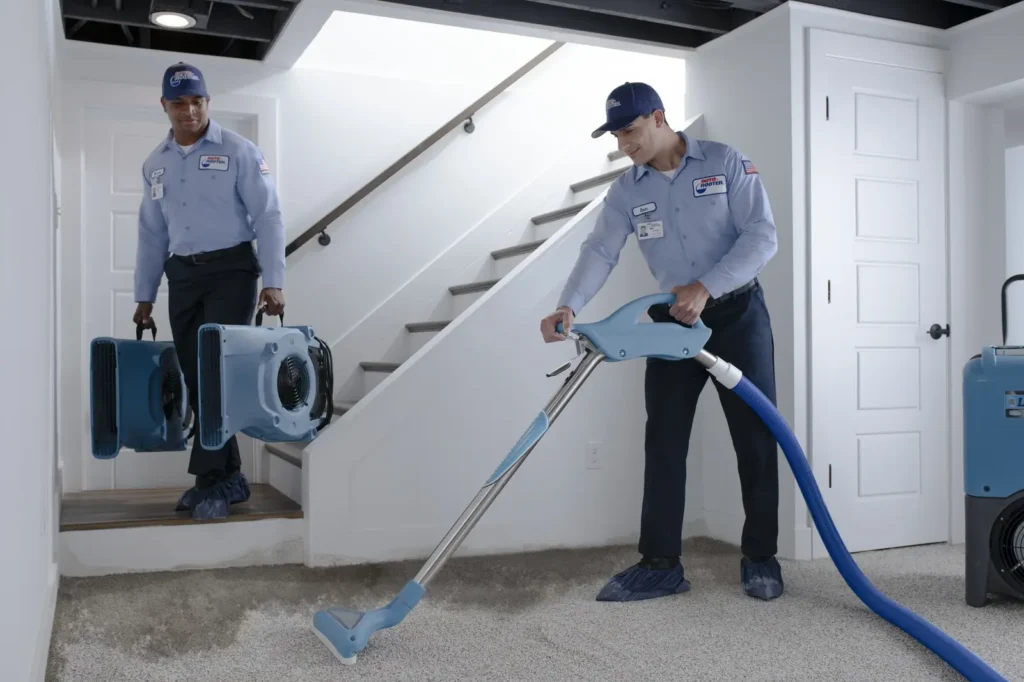
Professional mitigation is more than dropping off a few fans.
The response begins with evaluating the source and site conditions, identifying the areas and materials affected, assessing the water category and measuring moisture. Depending on the loss, technicians may then extract standing water, address materials that cannot appropriately be restored, clean affected areas as necessary and establish a controlled drying environment.
Air movers, dehumidifiers and other drying equipment are selected and positioned according to the conditions of the loss. Technicians then monitor moisture levels and psychrometric conditions and adjust the drying system as needed until appropriate drying goals are reached and documented.
In other words, the equipment is only part of the job. Assessment, monitoring and documentation are what turn equipment placement into a professional mitigation process.
Why should insurance agents have a local mitigation partner ready before a loss happens?
When an insured calls you with water in the house, they usually do not want a list of contractors to research. They want to know what to do next.
Having a mitigation partner you already know gives you somewhere to confidently hand off that part of the response.
Your mitigation contractor should communicate clearly with the property owner, document the loss thoroughly, understand professional restoration standards and provide the information necessary for the carrier and adjuster to evaluate the claim. Just as importantly, they should understand their role. A mitigation contractor documents conditions and performs the restoration work; the contractor does not make coverage decisions or tell an insured what their policy will or will not pay.
That distinction matters.
At Roto-Rooter Plumbing & Water Cleanup, our goal is to make the mitigation side of a water loss easier for the insured and easier for the insurance professionals involved in the claim. We know that when you refer a customer to us, you are trusting us with a relationship you worked hard to build.
Save Our Number Before You Need It
When one of your insureds experiences a water loss in Mobile, Baldwin or Washington County, call Roto-Rooter Plumbing & Water Cleanup at 251-479-9454. We’ll take it from there and keep the mitigation process moving.
Sources
- U.S. EPA — A Brief Guide to Mold, Moisture and Your Home
- ANSI/IICRC S500-2021 — Standard for Professional Water Damage Restoration, Fifth Edition
- IICRC — S500 Consensus Body Position Statement on Category of Water Damage and Weather-Related Events (March 16, 2026)
- IRMI — Revealing the Dark Secrets of Category 3 Water Exclusions
- Alabama Department of Insurance — Natural Disasters Guide
- FEMA — NFIP Claims Manual (June 2025)